



全国高温逼人 酷暑之下,美国正面临一场民生与城市韧性的考验


分享到微信
請掃描以上二維碼

进入八月下旬,美国许多地区仍然被酷热笼罩。原本以為夏季即将接
美国国家气象局指出,目前美国中南部及西南部正经歷危险、甚至可
这次高温最令人担心的,不只是白天气温高,而是夜间温度也居高不
对德州居民来说,炎热原本就是夏季生活的一部分,但是近来极端高
高温首先考验的是电力系统。千家万户同时开动冷气,用电量快速上
高温同样影响企业、农业、交通以及日常生活。一场极端天气带来的
尤其值得注意的是,美国气候预测中心8月23日表示,目前的极端
我们生活在休斯敦,更能深深感受到酷暑的压力。每天从有冷气的室
科技进步可以让城市更加智慧,但真正的「智慧城市」,最终还是要
在这样的高温季节,我们也应该多关心身边的人。打电话问候独居长
炎热的天气终究会过去,但极端气候给我们的警讯不能随之消失。
美国是一个有强大科技、资源和创新能力的国家。如何利用这些力量
面对逼人的高温,我们不仅要学会适应,更要开始為下一代建设一个
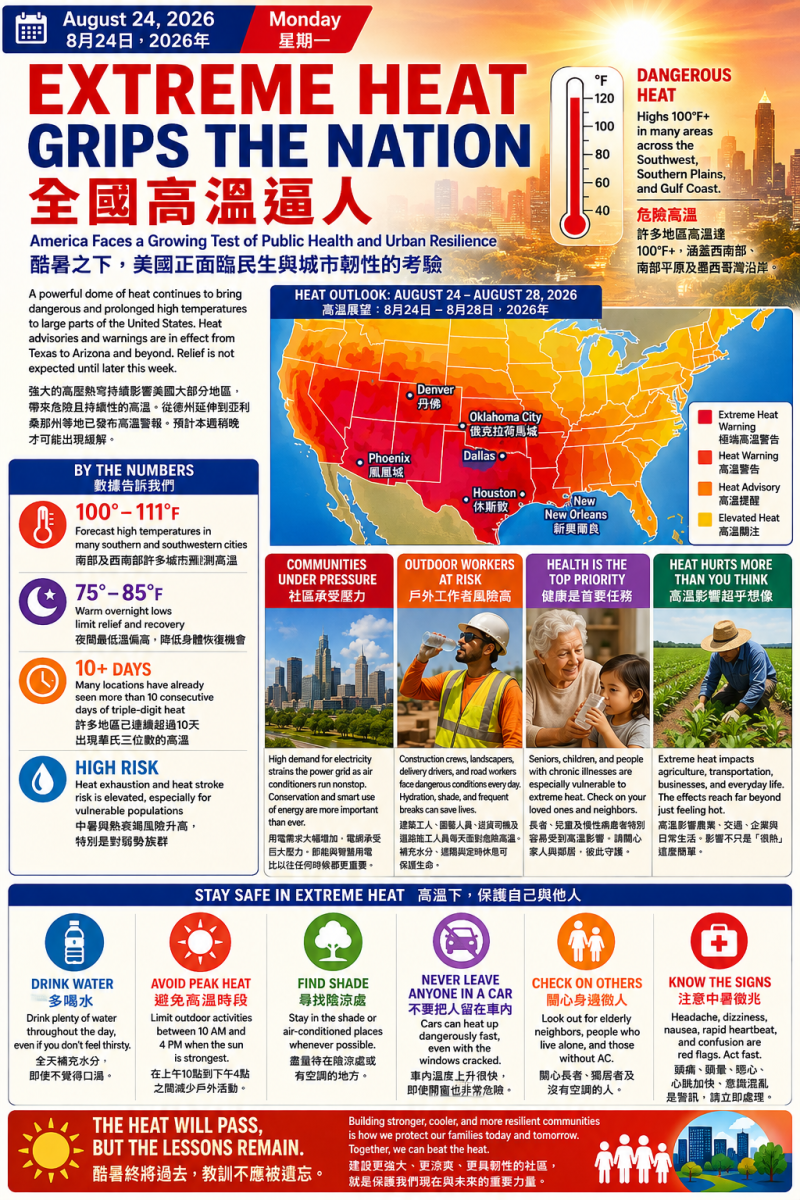
Extreme Heat Grips the Nation
America Faces a Growing Test of Public Health and Urban Resilience
As late August arrives, much of the United States remains trapped under intense summer heat. Many people expected temperatures to begin easing as the season moves toward its end, yet extreme heat continues across Texas, Oklahoma, Louisiana, New Mexico, Arizona, and other parts of the country.
The most concerning part of this heat is not only the scorching daytime temperatures, but also the fact that many areas remain unusually warm at night. When temperatures stay high after sunset, the human body has less opportunity to recover. This creates greater risks for seniors, children, outdoor workers, and families without adequate air-conditioning.
For Texans, hot summers are nothing new. But the increasing intensity and duration of extreme heat are forcing us to consider an important question: How should our cities prepare for a hotter future?
One of the first challenges is electricity. When millions of homes and businesses turn on their air-conditioning at the same time, demand for power rises sharply and places enormous pressure on the electrical grid.
Outdoor workers face another serious challenge. Construction crews, landscapers, road workers, delivery drivers, and many others must continue working under the burning sun. Access to drinking water, shade, and regular rest breaks becomes essential to their health and safety.
Extreme heat also affects agriculture, transportation, businesses, medical services, and everyday family life. It is no longer simply a matter of saying, “Today is very hot.” Prolonged heat has become an issue involving energy, public health, infrastructure, economic productivity, and community safety.
Here in Houston, we understand the pressure of summer heat very well. Walking from an air-conditioned building into the outdoors can feel like stepping into an oven. Such conditions remind us that future city development cannot focus only on roads, buildings, and economic growth.
We also need more trees and green spaces, shaded public areas, energy-efficient buildings, reliable power systems, smart-grid technology, and stronger support for seniors and vulnerable families.
Technology can make a city smarter, but a truly smart city must ultimately place human safety and quality of life at its center.
During periods of extreme heat, community responsibility also becomes especially important. We should check on elderly neighbors who live alone, remind our families to drink enough water, avoid unnecessary outdoor activity during the hottest hours of the day, and never leave children or pets inside parked vehicles.
The heat will eventually pass, but the warning it gives us should not be forgotten.
America has tremendous technological strength, resources, and innovative capacity. The question is how we use those strengths to build communities that are safer, more energy-efficient, and better prepared for increasingly severe weather.
Facing extreme heat is not only about surviving another summer. It is about preparing today for the kind of cities and communities we want to leave to the next generation.
分享到微信
請掃描以上二維碼


