







歐盟集體對抗美國之後果


分享到微信
請掃描以上二維碼
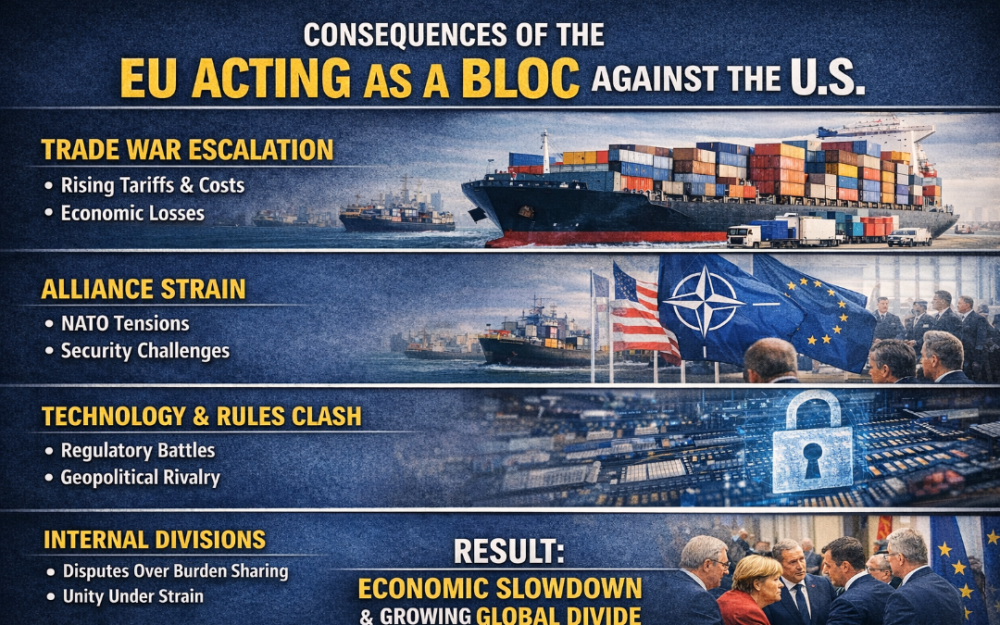
歐盟若以「集體一致」回擊美國,短期看似能放大談判籌碼,但最可
1. 貿易戰升級,雙輸但傷勢不均:關稅與反制會推高成本、壓縮訂單與
2. 同盟信任受損:政治對抗外溢到安全合作,NATO協調成本上升,
3. 科技與規則走向制度對抗:監管、反壟斷、數位政策可能被「地緣工
4. 歐盟內部分配壓力變大:團結能集中火力,也會放大誰承擔損失的爭
結論:對抗若成常態,美歐都會付出代價——經濟增速被摩擦吃掉,
Consequences of the EU Acting as a Bloc Against the U.S.
If the EU responds to the United States as a unified bloc, it may gain negotiating leverage in the short term—but it also risks four major consequences:
1. Trade escalation and a “lose–lose” outcome: Tariffs and counter-tariffs raise costs, disrupt supply chains, and weaken investment confidence—ultimately hitting businesses and consumers.
2. Erosion of alliance trust: Political confrontation can spill into security cooperation, increasing friction inside NATO and slowing coordination.
3. A shift into rule-based or “systems” conflict: Technology regulation, antitrust actions, and market-access rules can become geopolitical tools, triggering broader retaliation.
4. Greater internal strain within Europe: Unity concentrates power, but it also magnifies disputes over who bears the economic and political costs.
Bottom line: If confrontation becomes the new normal, both sides pay—slower growth, higher uncertainty, weaker security coordination, and a more fragmented global order.
分享到微信
請掃描以上二維碼