




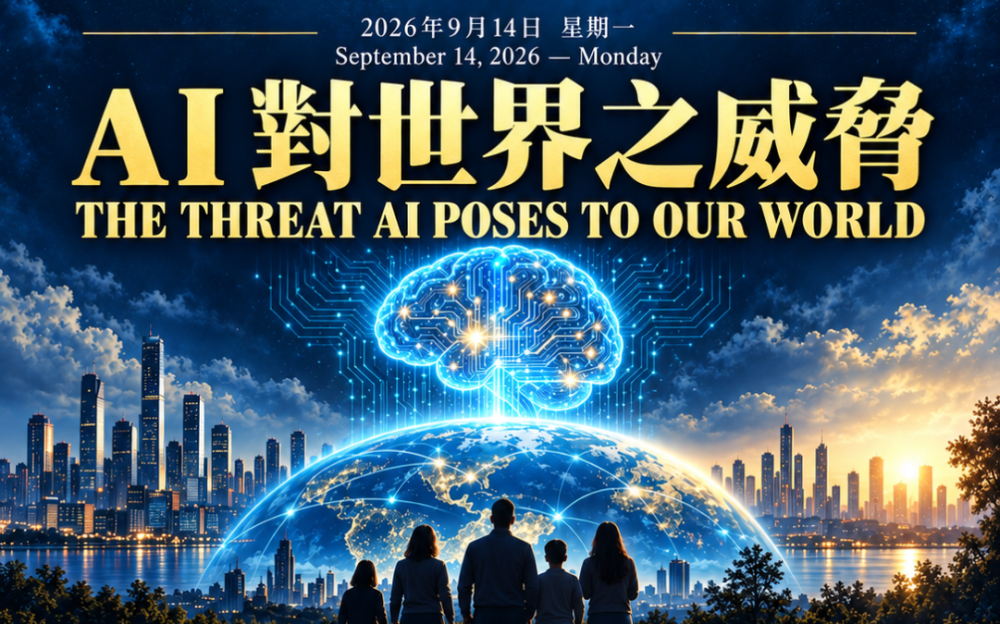
AI 對世界之威脅


分享到微信
請掃描以上二維碼
人工智慧正以前所未有的速度走入我們的生活。它能協助醫師判讀影
最迫近的威脅,是人們逐漸難以分辨真假。一段偽造的影片、一個模
其次,是工作與機會的重新分配。AI 可以協助人完成工作,也可能取代部分任務。企業追求效率之際,不
更令人憂慮的,是人工智慧進入戰場。國際紅十字委員會警告,AI
至於 AI 是否終將全面失控、威脅人類生存,不能把尚未確定的情境當成必然
對新聞媒體而言,生成內容愈容易,查證就愈重要;對教育而言,取
我們應當擁抱創新,也必須守住人的尊嚴。衡量 AI 成功與否,除了看它能替世界創造多少財富,更要看它是否讓普通人
人類創造了人工智慧,也必須為它的使用負起責任。科技可以愈來愈
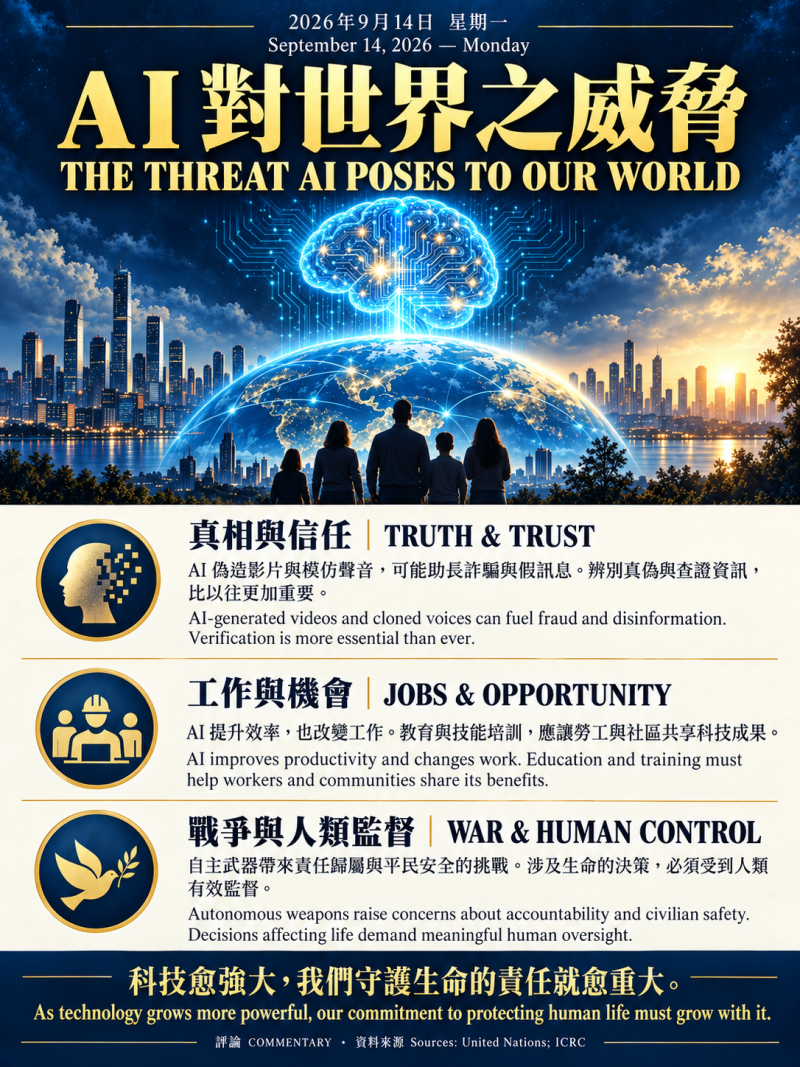
The Threat AI Poses to Our World
Artificial intelligence is entering our lives at an unprecedented pace. It can help doctors interpret medical images, improve business efficiency, and bring knowledge across languages and borders. Yet as the world celebrates these breakthroughs, we must also ask: Are we prepared for the risks they bring?
One of the most immediate threats is the growing difficulty of separating truth from deception. A fabricated video or a phone call imitating a loved one’s voice can become a weapon of fraud and manipulation. The United Nations has warned that AI-powered disinformation is already endangering peace and humanitarian operations. When even what we see and hear requires verification, the trust that holds society together comes under pressure. Source: United Nations
Another challenge is the redistribution of work and opportunity. AI can help people perform their jobs, but it can also replace certain tasks. As businesses pursue greater efficiency, they must recognize the human cost of that transition. For a family, a job means more than income. It represents dignity, stability, and hope for tomorrow. Schools, businesses, and governments should invest together in training so that people of every age and background have a chance to develop new skills.
Even more troubling is the arrival of artificial intelligence on the battlefield. The International Committee of the Red Cross warns that AI-enabled autonomous weapons may make their operation and consequences harder for humans to understand, predict, and control. As machines assume a greater role in decisions involving life and death, who takes responsibility for mistakes? Who protects innocent people? The race for technological superiority must never diminish the value of human life. Source: International Committee of the Red Cross
Whether AI will eventually escape human control and threaten humanity’s survival remains uncertain. We should not present that possibility as an inevitable outcome. But neither should we wait for harm before discussing responsibility. Applications affecting life, safety, and fundamental rights must undergo rigorous testing and continuous oversight, with meaningful human authority to intervene and stop them.
For the news media, the easier content becomes to generate, the more essential verification becomes. For education, the easier answers become to obtain, the more precious independent thinking becomes. Here in Houston, a city shaped by many cultures, we should bring technology education into our communities so that immigrants, small businesses, and young people can all participate in the future.
We should embrace innovation while protecting human dignity. AI’s success should be measured not only by the wealth it creates, but also by whether it makes ordinary people’s lives safer and more hopeful.
Humanity created artificial intelligence, and humanity must take responsibility for its use. As our technology grows more powerful, our commitment to protecting human life must grow with it.
分享到微信
請掃描以上二維碼