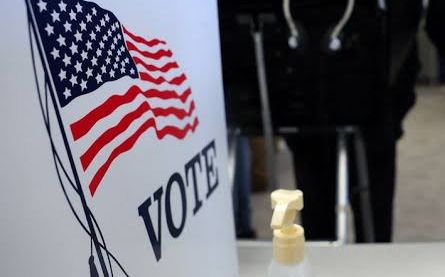







美國期中選舉觀察


分享到微信
請掃描以上二維碼
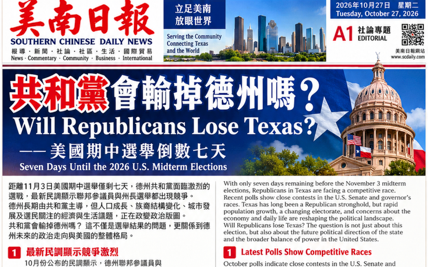
距離11月3日美國期中選舉僅剩七天,德州共和黨面臨競爭激烈的
最新德州選情
根據10月份公布的民調,德州聯邦參議員與州長選舉都出現值得關
Marist調查日期為10月8日至11日,可能投票選民誤差範
德州政治版圖正在變化
德州長期由共和黨主導,但本屆選舉呈現幾個值得觀察的現象。
第一,城市、郊區及鄉村選民的政治選擇存在明顯差異。休士頓大學
第二,經濟及家庭財務狀況成為選民關注的問題。Marist調查
第三,德州的聯邦眾議院選區重劃,使南德州部分選區成為全國關注
共和黨會失去德州嗎?
必須區分三種不同的選舉結果:共和黨可能在個別聯邦參議員選舉失
目前的民調顯示,兩黨在部分重要選舉中的支持度相當接近。最終結
11月3日不僅是兩黨席次的競爭,也將成為觀察德州未來政治走向
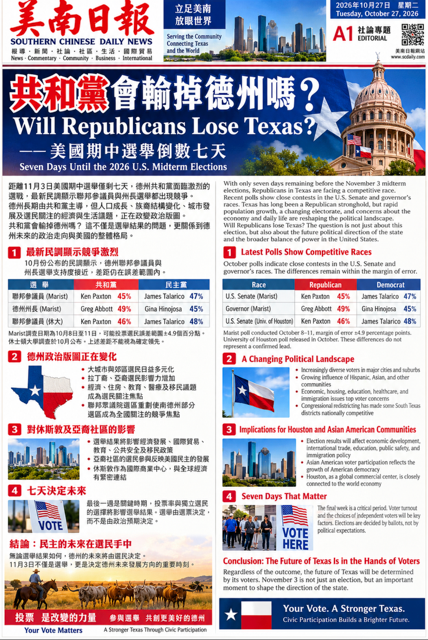
Will Republicans Lose Texas?
Seven Days Until the 2026 U.S. Midterm Elections
A Political Turning Point for Texas?
With only seven days remaining before the November 3 midterm elections, one of the most important political questions facing America is whether Republicans could lose significant ground in Texas, a state that has long been a cornerstone of Republican political power.
For decades, Texas has represented conservative political strength, economic opportunity, energy independence, and a deeply rooted tradition of individual freedom. Republican leadership has dominated statewide politics for more than a generation.
Yet Texas is changing.
Its population is growing, its major metropolitan areas are becoming increasingly diverse, and its economic and demographic transformation is reshaping political conversations across the state.
The question is no longer simply whether Texas is traditionally Republican or Democratic. It is whether the state's changing electorate will produce different political outcomes in 2026.
The Changing Political Landscape
Houston, Dallas, Austin, and San Antonio have become major centers of economic growth and cultural diversity.
Millions of new residents have arrived in Texas, attracted by employment opportunities, relatively favorable business conditions, and the state's expanding international economy.
At the same time, voters are increasingly concerned about inflation, housing affordability, healthcare, education, immigration, and the direction of the national economy.
These issues cross traditional party lines.
Republicans continue to emphasize border security, lower taxes, energy development, and business growth. Democrats have focused on healthcare access, public education, affordability, and reproductive rights.
The outcome will depend not only on party loyalty but also on how voters evaluate these competing priorities.
What the Polls Tell Us
October polling has indicated competitive races in several important statewide contests.
In the U.S. Senate race, surveys have shown a close contest between Republican Ken Paxton and Democrat James Talarico. In the governor's race, Republican Greg Abbott and Democrat Gina Hinojosa have also been the subjects of statewide polling.
However, polling represents voter preferences at a particular moment, not the final election result. Sampling uncertainty, turnout patterns, and late changes in voter opinion can all affect the outcome.
A close Senate race would not necessarily mean Republicans are losing control of Texas as a whole. The governorship, congressional delegation, and state legislature are separate contests with different electorates and political dynamics.
The Importance of Independent and Minority Voters
One of the most significant developments in Texas politics is the growing influence of suburban communities and voters from diverse ethnic backgrounds.
Asian Americans, Hispanic Americans, African Americans, and other communities contribute enormously to the state's economy, educational institutions, and civic life.
In metropolitan Houston, these communities are especially important to the region's international identity.
Their participation in elections reflects the broader development of American democracy.
For Asian American communities, political participation is about more than supporting one party or another. It is about ensuring that their voices are represented in decisions affecting education, small businesses, public safety, immigration, and economic opportunity.
What Is at Stake for Texas?
Texas has become one of the world's most important centers for energy, technology, manufacturing, agriculture, and international trade.
The decisions made by its elected leaders will influence economic investment, infrastructure, workforce development, healthcare, and relations with international trading partners.
For Houston, a global commercial center with strong connections to Asia, Latin America, Africa, and Europe, these policies have direct consequences.
Businesses need stability, communities need opportunity, and families need confidence in the future.
Regardless of which party wins, Texas leaders will face the responsibility of maintaining economic growth while addressing the needs of an increasingly diverse population.
Seven Days That Matter
The final week before Election Day is a critical period for candidates, political organizations, and voters.
Republicans are working to maintain their longstanding statewide political position. Democrats are seeking to expand their support and compete for offices historically held by Republicans.
Independent voters and turnout in both urban and rural communities will be important factors.
But elections are decided by ballots, not by political expectations.
The results of November 3 will provide a clearer picture of whether Texas voters are reinforcing established political patterns or moving toward a different balance of power.
Conclusion: The Future of Texas Belongs to Its Voters
Texas has always been a land of opportunity, ambition, and extraordinary transformation.
From its historic cattle ranches and oil fields to its modern technology companies, medical institutions, and international financial centers, the Lone Star State has continually reinvented itself.
Its political future will be determined through the same democratic process that has shaped American history.
Will Republicans lose Texas?
The question captures the uncertainty and significance of this election. The answer will come from the voters themselves.
On November 3, Texans will not merely choose political candidates. They will help determine the direction of their state and its role in America's future.
Democracy is strongest when citizens participate, understand the issues, and exercise their right to vote.
分享到微信
請掃描以上二維碼