




世界G2政治格局正在形成中


分享到微信
請掃描以上二維碼
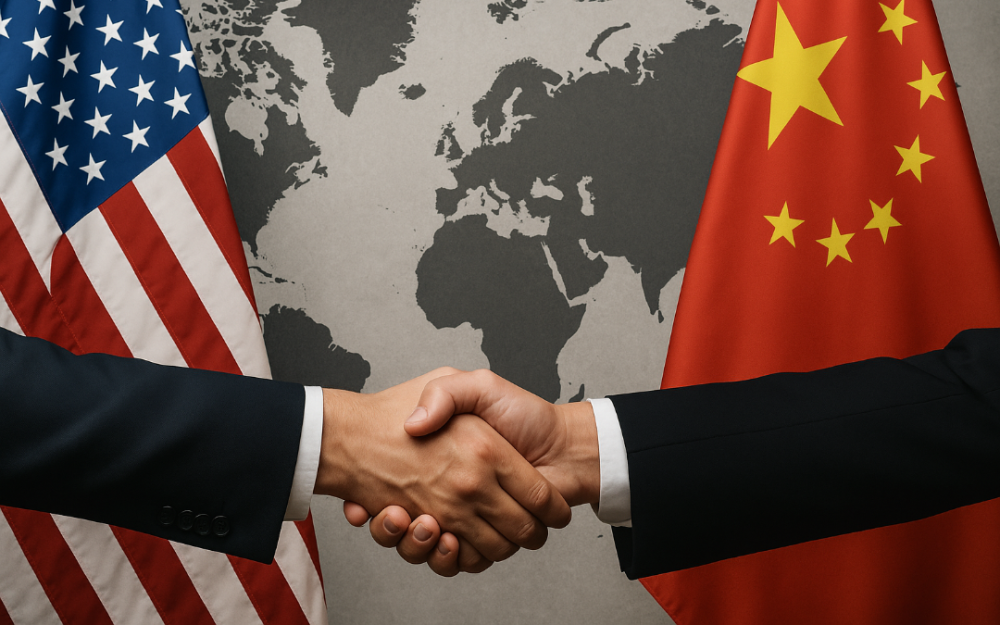
今天的世界,有一种「被重新分桌」的感觉。风声不是从某一条新闻
所谓「世界G2」,不是一句口号,而是一种趋势的凝聚——两个超
我观察到一个微妙的变化:新的「国力」不再只是土地与人口,而是
而G2格局成形的最大特徵,是「中间地带」突然变得拥挤——更多
作為一个长期关心移民、社区与国际合作的人,我心裡其实有一个更
今天写下这段话,像是為未来做一个註记:**G2不是终点,它只
The World’s G2 Political Order Is Taking Shape
Today, the world feels as if it is being reseated at a new table. The signals are not coming from one headline, but from thousands of decisions layered together—defense budgets, tariffs, technology restrictions, alliance choices, energy routes, and supply-chain redesign. A new map of global power is slowly coming into focus.
What people call a “G2 world” is not a slogan. It is the convergence of a trend: two massive centers of gravity are increasingly pulling global issues into clearer lines—security, technology, supply chains, finance, and values. Many countries do not want to choose sides, yet they are repeatedly pushed to do so—through votes, contracts, shipping routes, standards, and every critical node of the modern economy. This is not a simple replay of the Cold War. It is more complex, more fragmented, more technology-driven, and far faster.
I notice a subtle shift: national strength is no longer measured only by land and population, but by institutional mobilization, technological independence, financial resilience, and the cohesion of alliances. Competition is not only happening at borders; it is happening in data centers, cloud rules, AI models, undersea cables, rare earth minerals, and the infrastructure of the energy transition. These may look abstract, yet they directly shape jobs, immigration policy, corporate survival, and the cost of everyday life.
One defining feature of a forming G2 order is that the “middle ground” is suddenly crowded. More countries are practicing flexible, pragmatic diplomacy: they want markets and security; investment and sovereignty; cooperation and backup plans. The world becomes harder to predict—and therefore demands greater patience and wisdom. In the long run, the winners are not necessarily the loudest, but those who can endure, adapt quickly, and connect widely.
As someone who cares deeply about immigrants, communities, and international cooperation, I carry a quieter hope: that in the space between great-power rivalry, we do not forget ordinary people’s sense of safety. However large the chessboard becomes, the real tremors are felt by families, workers, and the next generation. May leaders retain humanity in competition and restraint in confrontation. May the world find a new way to coexist before the cracks widen beyond repair.
I write this today as a note for the future: G2 is not the destination—it is only the opening stroke of a new order. Our task is to understand the direction of the tide, protect the bottom line of our values, and build resilience for ourselves and for society.
分享到微信
請掃描以上二維碼