






美加对抗影响世界局势 从关税战到战略竞争,北美两大盟友的裂痕正在牵动全球经济与国际秩序


分享到微信
請掃描以上二維碼
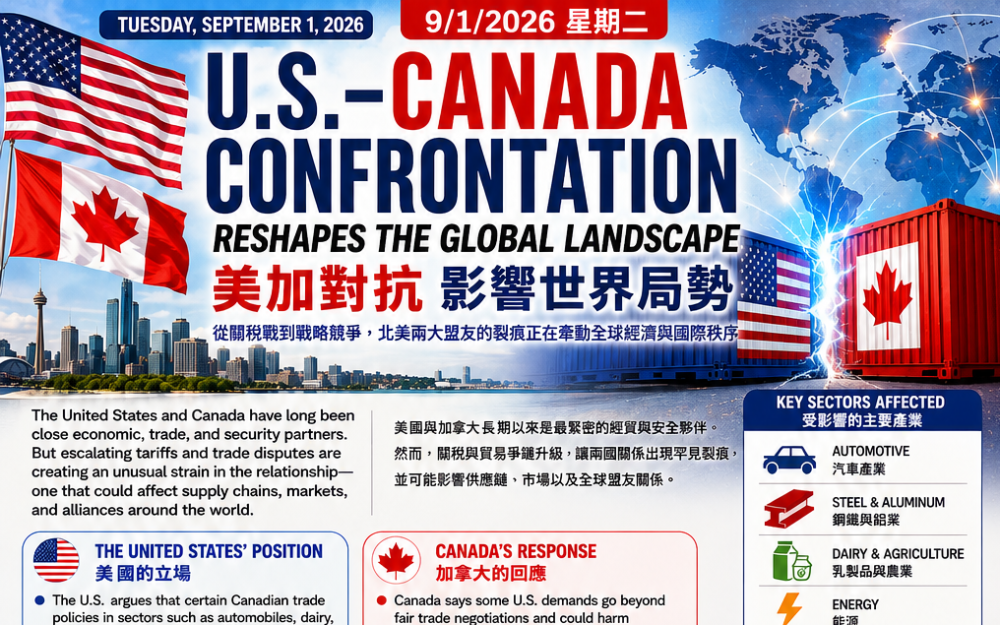
美国与加拿大长期以来不仅是邻国,更是全球最紧密的经贸与安全伙
美国政府认為加拿大在汽车、乳製品及其他领域对美国商品採取不公
加拿大政府则认為,美方最新提出的条件超出了公平贸易谈判的范围
这场冲突為何影响全世界?
首先受到冲击的是北美供应链。美国与加拿大的汽车、钢铁、能源、
第二,是USMCA北美自由贸易体系的可信度受到考验。美国、加
第三,这场冲突可能加速世界经济走向区域化与多元化。加拿大若降
更值得注意的是,美加两国同為北约盟国,也是西方安全体系的重要
美国希望透过关税重新平衡贸易、促使製造业回流;加拿大则强调必
美国与加拿大共享漫长的边界,也共享数十年建立起来的经济、安全
当世界最亲近的盟友都开始用关税与经济力量彼此施压,全球化的旧
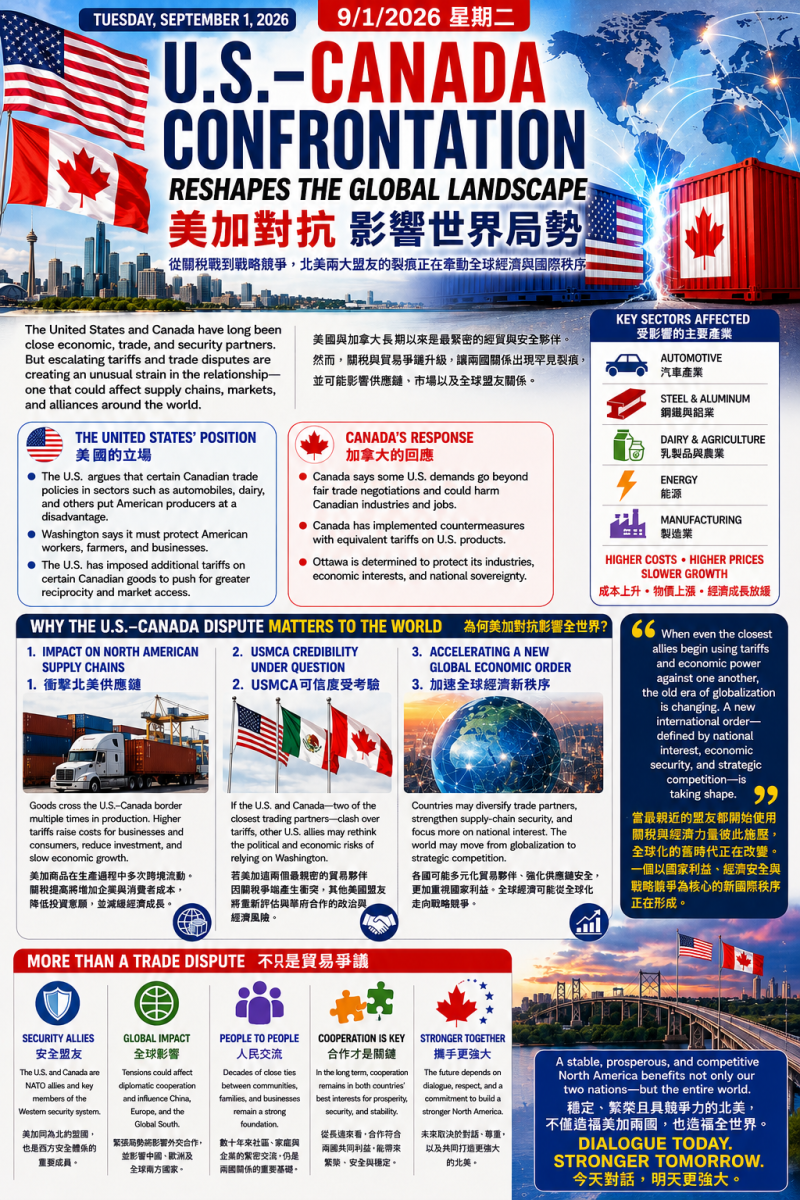
U.S.–Canada Confrontation Reshapes the Global Landscape
From Tariff Disputes to Strategic Competition, Tensions Between Two North American Allies Are Affecting the Global Economy and International Order
Editorial — The United States and Canada have long been more than neighboring countries. They are among the world’s closest economic, trade, and security partners. However, growing trade disputes and escalating tariff measures are creating an unusual strain in the relationship.
What began as a bilateral trade disagreement now has broader implications for North American supply chains, global markets, and confidence among Western allies.
The United States argues that certain Canadian trade policies, particularly in sectors such as automobiles, dairy products, and other industries, place American producers at a disadvantage. Washington has emphasized the need to protect American workers, farmers, and businesses while demanding greater reciprocity and more open access to the Canadian market.
Canada, however, maintains that some U.S. demands go beyond the boundaries of fair trade negotiations and could harm Canadian industries and national interests. Ottawa has therefore responded with its own countermeasures, increasing the possibility of a prolonged trade confrontation.
Why Does the U.S.–Canada Dispute Matter to the World?
The first major concern is the North American supply chain.
The economies of the United States and Canada are deeply integrated. Automobiles, steel, energy, agriculture, manufacturing, and many other industries depend on goods and components crossing the border multiple times during production.
When tariffs rise, the additional costs may eventually be passed on to companies and consumers through higher prices, reduced investment, and slower economic growth.
A second concern is the future credibility of the United States–Mexico–Canada Agreement, or USMCA.
The agreement was designed to provide stability and predictable rules for the North American economy. If two of the closest trading partners in the world become involved in a major tariff confrontation, other U.S. allies—including countries in Europe and Asia—may begin reassessing the political and economic risks of their own relationships with Washington.
Third, prolonged U.S.–Canada tensions could accelerate a larger transformation of the global economic system.
If Canada seeks to reduce its dependence on the American market, it may strengthen trade relationships with Europe, Asia, and other regions. Other nations may adopt similar strategies, placing greater emphasis on diversified markets and supply-chain security.
As a result, the world economy may continue moving away from an era centered primarily on globalization and efficiency toward one increasingly shaped by national interests, economic security, and geopolitical competition.
More Than a Trade Dispute
The importance of the relationship extends far beyond commerce.
The United States and Canada are NATO allies and key members of the Western security system. If economic disagreements continue to deepen, they could eventually affect diplomatic cooperation, defense coordination, and broader international partnerships.
At a time when the world is already facing wars, energy challenges, artificial intelligence competition, and major geopolitical realignment, divisions among traditional Western allies could have consequences far beyond North America.
China, Europe, and countries across the Global South will closely observe how the relationship develops and may adjust their own diplomatic and economic strategies accordingly.
The United States seeks to use trade policy to strengthen domestic manufacturing and protect American industries. Canada, meanwhile, is determined to defend its own industries, economic interests, and national sovereignty.
Both governments therefore face legitimate domestic political and economic pressures.
The central question is whether the confrontation will remain a negotiating tool—or become a deeper and more permanent structural division between the two countries.
The United States and Canada share one of the longest borders in the world, along with decades of economic integration, security cooperation, and close ties between their peoples. In the long term, cooperation remains strongly in the interests of both nations.
But the current tension sends an important message to the international community:
When even the closest allies begin using tariffs and economic power against one another, the old era of globalization is changing. A new international order—defined increasingly by national interest, economic security, and strategic competition—is taking shape.
分享到微信
請掃描以上二維碼