





国际学生签证处境困难 政策收紧、审查加深 国际学生的美国梦面临考验


分享到微信
請掃描以上二維碼
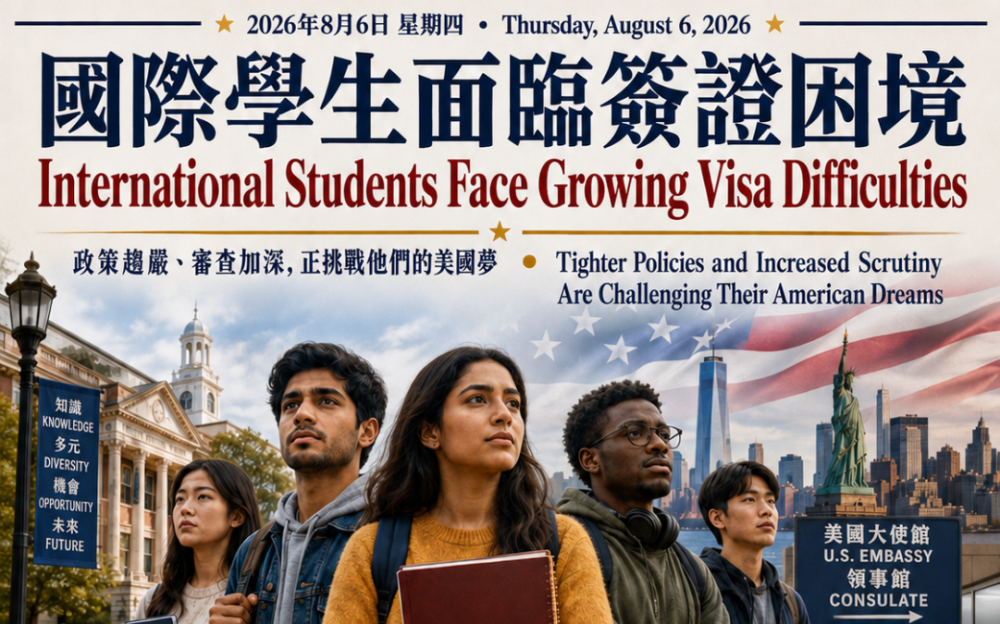
多年以来,美国凭藉世界一流的大学、自由开放的学术环境,以及多
然而,近年来美国学生签证政策持续收紧,国际学生的处境日益困难
更令人忧心的是,美国已确定改变国际学生长期沿用的「身分有效期
这项改变对国际学生造成极大的不确定性。研究工作不一定能按照预
此外,多数非移民签证申请人目前原则上都需要亲自接受领事面谈,
许多学生即使已经获得大学录取,也可能因签证延误而错过开学日期
对已经在美国求学的学生而言,压力同样沉重。他们必须随时保持全
毕业后的道路也充满挑战。许多国际学生希望利用选择性实习训练计
美国当然有责任维护国家安全,防止签证欺诈及非法居留。但是,安
国际教育是一座连接世界的桥樑。今天来到美国留学的青年,未来可
我们呼吁美国政府在维护安全的同时,也应建立清楚、稳定、公平而
美国之所以伟大,不只是因為拥有强大的经济与科技,更因為它曾经
教育不应成為政治角力的牺牲品。让真正希望求学的青年能够安心进
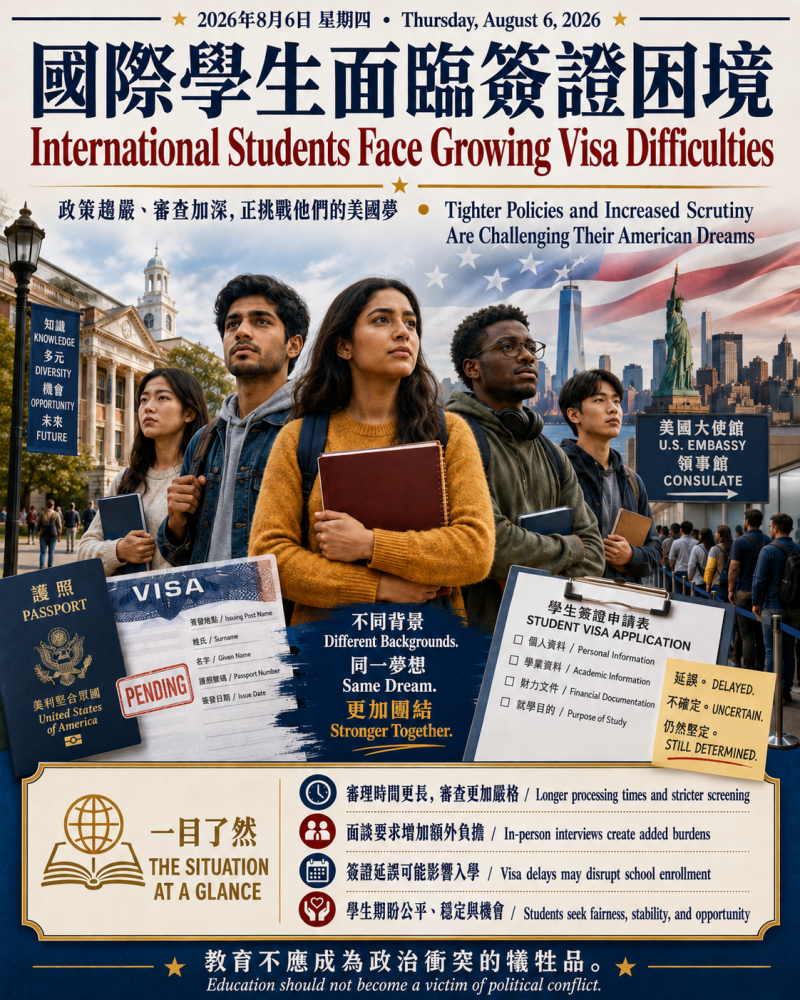
International Students Face Growing Visa Difficulties
Tighter Policies and Increased Scrutiny Are Challenging Their American Dreams
For many years, the United States has attracted outstanding young people from around the world because of its world-class universities, open academic environment, and multicultural society. International students contribute not only talent and cultural diversity to American campuses, but also make important contributions to scientific research, technological innovation, and local economies.
In recent years, however, U.S. student visa policies have become increasingly restrictive, placing international students in a more difficult position. In addition to preparing admission letters, financial documents, and detailed study plans, applicants may also face stricter interviews, security screenings, and reviews of their social media activity.
Many students are now concerned that even ordinary comments or posts made online could affect the outcome of their visa applications. This increased uncertainty has created anxiety for students and their families, even after they have already received admission from an American university.
The process itself has also become more complicated and time-consuming. Many visa applicants are required to attend in-person interviews, while appointment availability at some U.S. embassies and consulates remains limited. Students who live far from a consulate must often spend additional money on transportation, lodging, and application-related expenses.
Even after receiving admission, some students may miss the beginning of the academic semester because of visa delays. In many cases, families have already paid tuition deposits, housing fees, and airline tickets. If a visa is not issued in time, they may suffer serious financial losses and be forced to postpone their education.
For students who are already studying in the United States, the pressure is equally serious. They must maintain full-time enrollment, keep their school and address information updated, and strictly follow regulations regarding employment and internships. Even a small administrative mistake may affect their immigration record, work authorization, or legal status.
International students also face uncertainty after graduation. Many hope to participate in Optional Practical Training, commonly known as OPT, so they can apply what they have learned in American companies, laboratories, hospitals, and research institutions.
However, debates over foreign graduates, employment opportunities, and immigration policy have made it increasingly difficult for students to plan their careers and futures. Some students invest years of effort and significant financial resources in an American education, only to discover that their ability to remain and work in the country is uncertain.
The United States certainly has the responsibility to protect national security, prevent visa fraud, and enforce immigration laws. However, security screening should not become a system of general suspicion toward all international students. Young people who genuinely come to study, conduct research, and contribute to society should not be forced to live under constant fear and uncertainty.
International education is a bridge connecting the United States with the rest of the world. Today’s international students may become tomorrow’s scientists, doctors, entrepreneurs, diplomats, educators, and global leaders. Their impression of America is shaped not only by what they learn in the classroom, but also by how they are treated by the government and society.
We therefore urge the U.S. government to establish a student visa system that is clear, stable, fair, and efficient while continuing to protect national security. Universities should also provide stronger legal guidance, psychological support, and emergency assistance to help international students understand their rights and responsibilities.
America’s greatness has never depended only on its economic strength or technological leadership. It has also been built upon its willingness to open its doors to talented and hardworking people from around the world.
Education should not become a victim of political conflict. Allowing qualified international students to enter the country, complete their studies, and contribute to society is essential to preserving America’s long-term competitiveness and global leadership.
分享到微信
請掃描以上二維碼