







中尼边境冰川崩塌酿浩劫 死伤惨重、数千人下落不明


分享到微信
請掃描以上二維碼
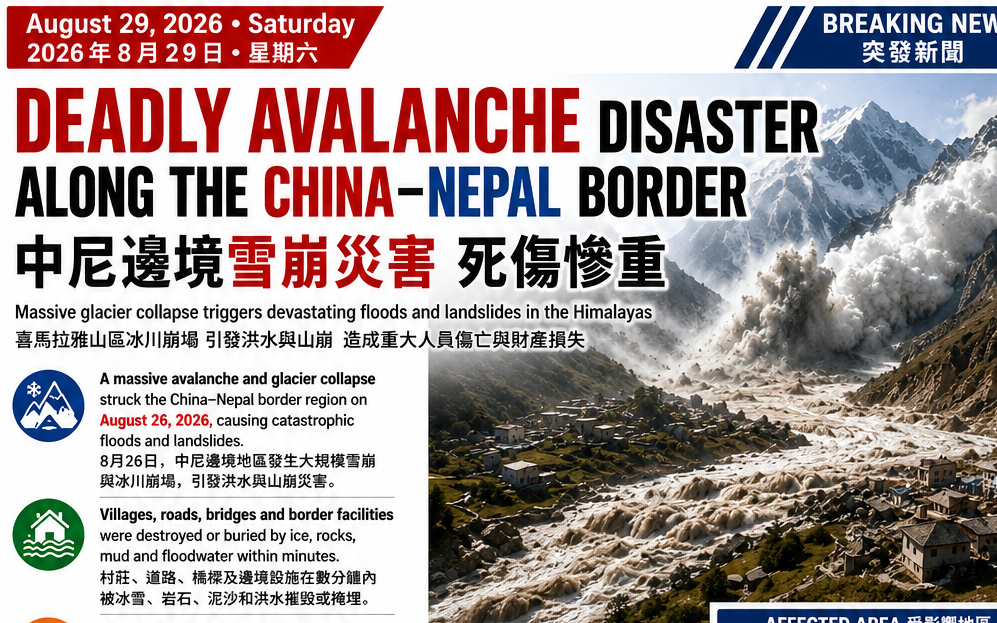
喜马拉雅山区再度传出重大天然灾害。8月26日上午,中国西藏与
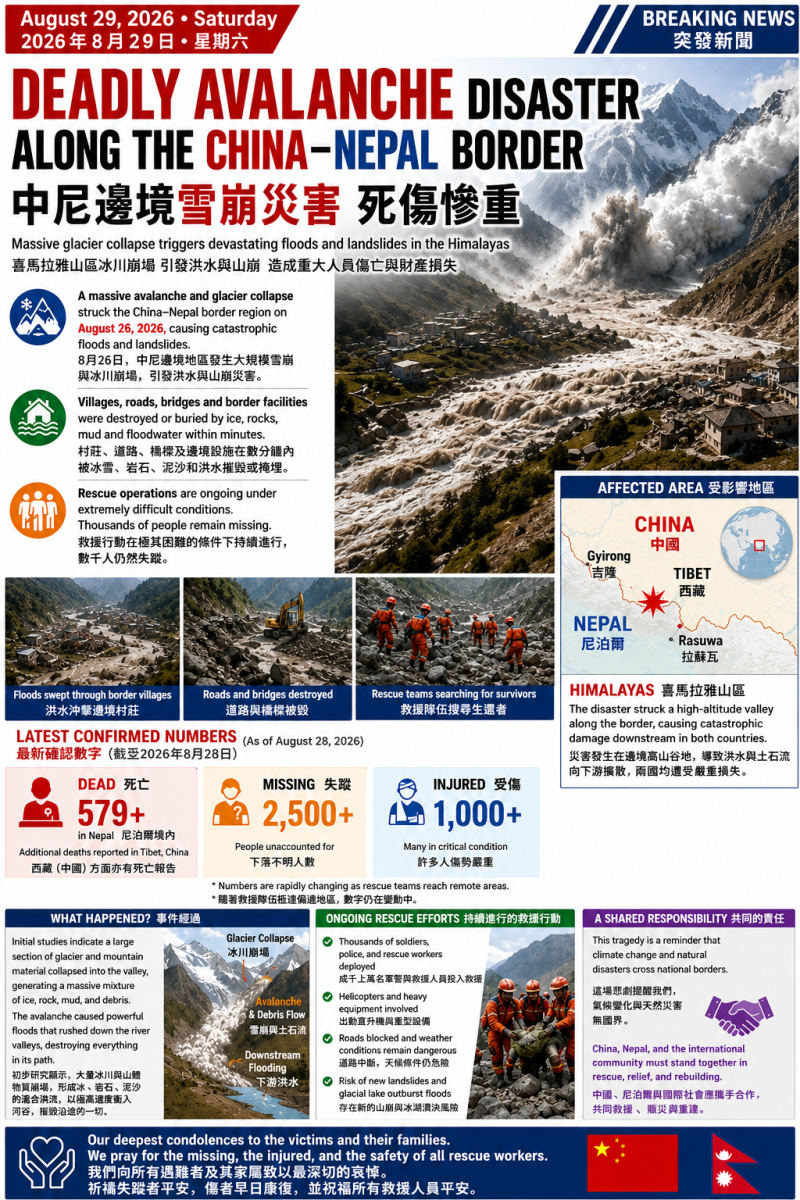
截至8月28日,各方公布的伤亡数字仍在快速变化。路透社报导,
这次灾害并不是单纯的「雪崩」。初步分析指出,喜马拉雅山一处冰
灾难发生后,中国与尼泊尔均投入大批救援人员、军警、直升机及重
更令人忧心的是,失踪人口中包括大量外国游客、登山客、劳工以及
喜马拉雅山孕育了亚洲许多重要河流,也是一个极為脆弱的高山生态
面对如此惨重的伤亡,我们向所有遇难者致以深切哀悼,也期待中国
在大自然面前,国界并不能阻挡洪水;在人道救援面前,也不应存在
Deadly Avalanche Disaster Along the China–Nepal Border
A major natural disaster has struck the Himalayan region along the China–Nepal border. A massive collapse of ice, snow, rock, and debris triggered destructive flooding and mudslides through mountain valleys, causing heavy casualties and widespread damage.
Entire villages, roads, bridges, and border facilities were reportedly damaged or destroyed within a short period of time. Rescue teams from both China and Nepal have been dispatched to the affected areas, but difficult terrain, blocked roads, unstable mountains, and continuing weather risks have made rescue operations extremely challenging.
The number of dead, injured, and missing continues to change as emergency teams reach isolated communities. Many people remain unaccounted for, and authorities fear that the final casualty toll could rise as more remote areas are searched.
The disaster was not simply an ordinary avalanche. Initial reports indicate that a large section of glacier and mountain material collapsed into the valley, sending a powerful mixture of ice, rocks, mud, and floodwater downstream. The force of the disaster swept away infrastructure and left large areas buried beneath debris.
China and Nepal have mobilized rescue workers, police, military personnel, helicopters, and heavy equipment to search for survivors. However, damaged transportation routes and the possibility of additional landslides or flooding continue to threaten both local residents and rescue crews.
The Himalayan region is one of the most environmentally fragile areas in the world. Rising temperatures and rapidly changing mountain conditions have increased concerns about melting glaciers, unstable slopes, and the growing danger of glacial lake floods and landslides.
This tragedy is another reminder that climate-related disasters can cross national borders without warning. They threaten not only the environment, but also human lives, communities, transportation systems, and economic development.
At this difficult moment, we extend our deepest condolences to the families of those who lost their lives and our prayers to those who are still missing or injured.
China, Nepal, and the international community must continue working together to support rescue operations, provide humanitarian assistance, and help affected communities rebuild.
Natural disasters recognize no national borders. Human compassion and rescue efforts should have no borders either.
分享到微信
請掃描以上二維碼